

Article By: Robin Gupta
July 03, 2025 | 6:07 Minutes Read | Updated On: 03 July 2025
Vehicle Safety Simulations: Improving Automotive Safety with VR
Vehicle safety has never been more important than it is today. With road traffic injuries claiming over 1.3 million lives every year (WHO, 2023), auto manufacturers and regulators are constantly seeking more efficient, accurate, and scalable ways to enhance automotive safety. Among the most promising developments is the rise of vehicle safety simulations powered by virtual reality (VR).
At Kompanions, we create immersive simulations that empower the automotive sector with tools to validate, test, and improve safety systems without waiting for a real-world crash to occur.
This blog explores how VR for vehicle safety is transforming the way manufacturers design, test, and iterate on their vehicles.
The Problem with Traditional Crash Testing
Conventional car crash testing involves highly controlled physical experiments using crash dummies and expensive prototypes. While effective, these tests:
- Are costly (running into millions per model)
- Take significant time to prepare and execute
- Offer limited repetition before requiring reconstruction
- Provide data only on the specific scenario tested
Moreover, real-world road conditions involve countless variables—weather, driver behavior, vehicle condition—that are hard to replicate in a lab.
That’s where automotive safety simulations step in.
What Are Vehicle Safety Simulations?
Vehicle safety simulations are virtual environments where cars and crash scenarios are digitally modeled to test vehicle responses under a wide array of conditions. Leveraging VR safety solutions, engineers can simulate thousands of test cases without the need to build physical prototypes.
These simulations include:
- Vehicle crash simulations (e.g., frontal, side, rollover impacts)
- Driver behavior scenarios (e.g., distraction, fatigue, intoxication)
- Environmental simulations (e.g., fog, night-time, rain, snow)
With VR, these simulations become even more realistic, enabling drivers and engineers to experience car crashes, avoidance maneuvers, or emergency braking in immersive 3D environments.
Benefits of Using VR in Vehicle Safety Simulations
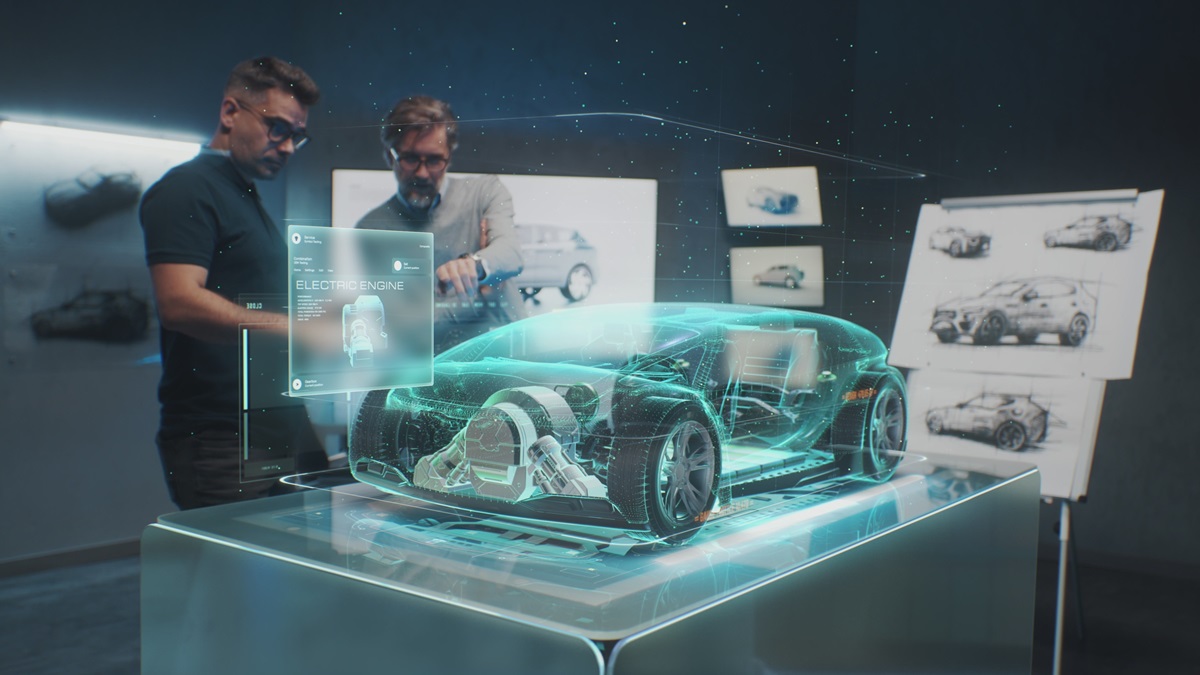 Virtual reality brings a new dimension to automotive safety, enabling cost-effective, scalable, and immersive testing environments that surpass the limitations of traditional crash testing methods.
1. Cost Efficiency
Traditional crash testing requires expensive prototypes and multiple physical setups. With VR-based vehicle crash simulations, you can recreate hundreds of crash scenarios at a fraction of the cost.
This enables continuous testing and refinement without the financial burden, making it a cost-effective choice for manufacturers aiming to validate designs efficiently and without waste.
2. Scalability & Flexibility
VR-powered safety simulations for car models can be tweaked in minutes to account for design changes, road layouts, or different passenger configurations.
In real-world crash testing, every scenario needs its own setup. With VR, automotive safety simulations can be adapted quickly—change the road condition, modify passenger loads, or test alternate designs—all within minutes.
This flexibility allows developers to explore more combinations and cover more edge cases that are impractical in traditional testing environments.
3. Safer Testing
No real people or vehicles are at risk. Engineers and testers can safely examine the impact of high-speed collisions, fire hazards, or part failures.
VR ensures that no human lives or real vehicles are at stake during testing. Simulate dangerous crashes, fire hazards, rollovers, or part failures with zero physical risk.
This not only protects personnel but also opens the door for testing extreme scenarios that would be too hazardous to replicate in a controlled, real-world setting.
4. Faster Iteration Cycles
VR allows for real-time modifications and immediate results. Engineers can tweak design elements, rerun crash simulations, and test safety improvements within hours.
This rapid loop enables faster product development, reduces bottlenecks in testing pipelines, and significantly cuts down the time required to bring safer vehicles to market.
5. Enhanced Training
Beyond design and testing, car crash simulators offer invaluable training experiences. Emergency responders can practice rescue protocols, driving instructors can simulate real crash outcomes, and automotive engineers can visualize force dynamics.
With XR training solutions, it becomes experiential, repeatable, and far more effective than traditional classroom-based methods.
Streamline automotive safety testing. Schedule an enterprise-grade VR simulation demo now.
Book a Free DemoUse Cases and Applications
From crash testing to compliance, the applications of VR in vehicle safety go far beyond simulations alone. Below are key use cases where virtual reality is driving measurable improvements across the automotive industry.
| Use Case | Description |
|---|---|
| Vehicle Prototyping | Test vehicle models under various crash and stress scenarios |
| Regulatory Compliance | Meet safety certification requirements with comprehensive scenario testing |
| Driver Training | Simulate dangerous scenarios without real-world risks |
| Gamified Assessments | Provide engaging learning for safety protocols and decision-making |
| R&D Innovation | Evaluate impact of new materials or design tweaks in virtual crash tests |
The Role of AI in VR Safety Simulations
Modern vehicle safety simulations often integrate AI models that predict crash outcomes, analyze driver responses, and suggest design optimizations. By blending AI and VR, manufacturers gain a powerful framework for:
- Predictive accident modeling
- Custom safety scoring based on simulated behaviors
- Real-time hazard analysis
This paves the way for safer roads and smarter car design.
Real-World Example: VR Crash Simulations in Action
Volvo has been using vehicle crash simulations for over a decade, gradually shifting from physical-only testing to digital models. With recent advancements, their in-house teams can now simulate human body responses in accidents using VR mannequins with AI-powered biomechanical feedback.
Another example is BMW’s use of car crash simulators to train their engineers in understanding force dynamics and stress points during accidents, resulting in safer car cabins and better airbag placement.
Why Business Owners Should Pay Attention
Automotive business leaders, especially those involved in manufacturing, R&D, or fleet safety, can unlock significant ROI with VR:
- Lower R&D costs
- Safer workforce training
- Faster product cycles
- Stronger compliance records
And with VR for automotive safety, the industry is no longer limited by location or scale. Remote teams can collaborate in real-time, from anywhere.
Kompanions: Transforming Vehicle Safety with Spatial Simulations
At Kompanions, we blend technology, creativity, and pedagogy to create industrial AR VR experiences that redefine how industries approach safety. Our automotive safety simulations empower clients to:
- Explore what-if scenarios with ease
- Integrate human behavior variables
- Run stress tests under virtual pressure
And it’s not limited to cars—our platform adapts to trucks, two-wheelers, buses, and autonomous vehicles.
We don’t just simulate. We teach, train, and transform.
"Safety isn't just about hardware. It’s about insight. VR gives you the insight to act before impact."
The Future of Safety is Simulated
In the next five years, vehicle safety simulations are expected to become a regulatory standard. Insurers, regulators, manufacturers, and drivers all stand to benefit.
And as immersive technologies evolve, expect even more realistic haptic feedback, AI-powered risk prediction, and deeper integrations with connected vehicles.
Looking to get started?
Boldly explore the future of VR for automotive safety—and let Kompanions guide your journey.