
Article By: Robin Gupta
June 27, 2024 | 5:15 Minutes Read | Updated On: 20 August 2025
Augmented Reality QR Codes - Benefits and Use Cases
Quick Response (QR) codes are go-to solution for businesses to share links, product details, and promotional content with a simple scan. They’re widely used in marketing, retail, logistics, and customer service for their speed and ease of use. However, traditional QR codes are static and limited to redirecting users to flat digital destinations like websites or PDFs. As user expectations shift toward more engaging and immersive experiences, these basic QR codes often fall short in delivering meaningful interactivity.
The issues with QR codes, as listed below, are quickly resolved with AR:
- QR codes lack the visual appeal factor
- QR codes lead to URL links that open restricted content in a separate browser.
- QR codes are inflexible; any change in URL implies a new QR code and overhaul of your collaterals if it's printed on them.
- QR codes have limited data tracking abilities.
From product packaging to interactive marketing campaigns, AR QR codes are transforming customer engagement, providing businesses with a powerful tool to stand out in a crowded digital landscape. In this article, we explore what AR QR codes are, how they work, and why they’re the future of smart product experiences.
What AR QR Codes Are?
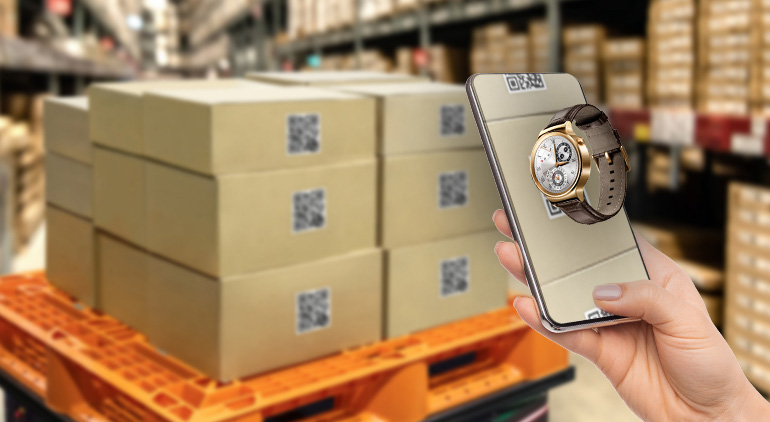
An Augmented Reality QR code is a “quick response" code with an AR marker. It redirects the user to the AR mobile or web app and enhances the product service offering by creating a 3D interactive link to the real world.
QR codes are the “triggers” to launch AR experiences, also known as Web AR, and usually redirect the user to a call to action or a landing page.
AR QR codes are revolutionizing the way users interact with digital content by merging the real and virtual worlds. Unlike traditional QR codes, an Augmented Reality QR code not only directs users to a website or app but also triggers immersive 3D experiences using smartphones or AR devices.
How Do Augmented Reality QR Codes Work?
When a user scans the code, the link loads a lightweight launcher that requests camera permissions, preloads 3D assets, and initializes the device’s AR framework. On modern phones, this is usually WebAR in the browser or a native runtime using ARKit or ARCore.
Once initialized, the experience detects a suitable surface or image marker, places the 3D content in the scene, and begins real time tracking so the model remains stable as the user moves.
Behind the scenes, a content delivery network serves compressed 3D files, textures, and scripts so load times stay low. The experience can log events such as session start, dwell time, interactions, and call-to-action clicks for analytics.
Marketers or trainers can swap content without reprinting by routing the same QR to a new scene version, which keeps maintenance simple and campaigns agile.
AR QR Codes vs Traditional QR Codes: A Comparison
| Feature | Traditional QR Codes | Augmented Reality QR Codes |
|---|---|---|
| Content type | Static destinations such as URLs, text, vCards, basic media | Immersive 3D scenes, product try-ons, guided overlays, mini games |
| Setup effort | Create code, point to page or file | Create 3D assets, host WebAR or app scene, then link via QR |
| Device requirement | Any camera scanner or QR app | Modern smartphone with AR-capable browser or app |
| Speed to value | Instant link open | Short preload, then interactive AR session |
| Engagement depth | Low to medium, mostly viewing or clicking | High, spatial interaction, tap hotspots, rotate, scale, place |
| Analytics | Scans and clicks | Scans, session time, object interactions, CTA conversions |
| Offline use | Possible with embedded data or cached pages | Limited, requires live assets and camera permissions |
| Typical use cases | Payments, website links, menus, coupons | Product demos, packaging experiences, training overlays, tourism |
| Cost to launch | Very low | Moderate, driven by 3D content creation and hosting |
| Maintenance | Minimal, update target URL as needed | Swap scene versions without reprinting, iterate based on analytics |
Transform static scans into immersive AR journeys
Contact UsThe Benefits of Augmented Reality QR Codes
AR QR codes are transforming the way we interact with digital content, offering a seamless blend of the physical and virtual worlds. These innovative codes enable users to access immersive, 3D experiences with a simple scan, enhancing engagement and interactivity.Now, let's look into these specific benefits of AR-powered QR codes.
1. Creative and customizable for brand promotion
With an AR QR code combination, users can quickly scan to see product specifications or interact with a 3D product or video. Users get a magical experience simply by scanning a code.
The data modules of the code can be customized by adding brand colors and a logo. It makes it more attractive and appealing, thus inducing a user to check it out.
An amalgamation of creative and aesthetic 2D and 3D with many graphics and video styles can deliver a truly immersive experience.
2. Data analytics
The Augmented Reality QR Codes can be easily tracked and help with data analytics like the number of people who scanned, the locations of scanning, time of scans, etc.
These help companies get insights about the user and target audience and modify future campaigns better.
Related post: Benefits of Augmented Reality in Business
3. Connectivity and flexibility
The easy-to-scan codes can be shared across print and digital media with a phone. The linked content on the marker can be viewed across print and digital media, creating a cohesive experience.
Using augmented reality QR codes content can also be updated frequently, and being easily scannable is user-friendly.
4. Customer purchase journey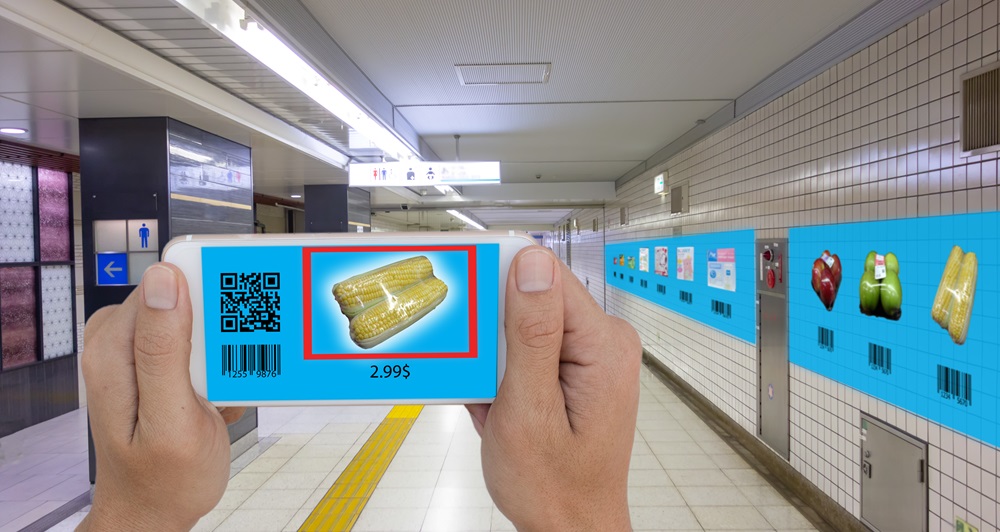
AR empowers brands with control over the customer's journey and purchase by funneling the customer to the culminating sales activity such as a landing page and initiating a call to action.A consultancy survey reported that 93% of its respondents want to buy experiences and not just products. AR and VR can offer brands the tools to provide experiential marketing.
4. Easy integration with print and packaging
AR QR codes can be seamlessly printed on packaging, brochures, posters, or labels, making them ideal for physical-to-digital transitions. Brands can deliver immersive AR experiences without changing existing materials, allowing cost-effective upgrades to traditional media and boosting user interaction directly from physical touchpoints.
5. Increased brand recall and conversion rates
By offering memorable and interactive experiences, AR QR codes make brand interactions more engaging and personalized. This heightened engagement leads to stronger emotional connections, which boosts brand recall. The immersive nature of AR also encourages quicker decision-making, ultimately increasing conversion rates and driving measurable business outcomes.
Boost customer engagement with KOMPANIONS' AR solutions.
Contact UsSectoral Use Cases of QR Codes in Augmented Reality
QR codes in Augmented Reality (AR) are unlocking new potential across various sectors, seamlessly integrating digital enhancements into everyday activities. These versatile codes enable industries such as retail, education, healthcare, and tourism to offer enriched, interactive experiences.
Now, let's explore the specific sectoral use cases of QR codes in augmented reality.
1. Infotainment
QR Codes with AR markers can make education insightful and fun by creating 3D visualizations. An AR-based QR code can be set up in textbooks or in charts that students can see to see a 3D rendering.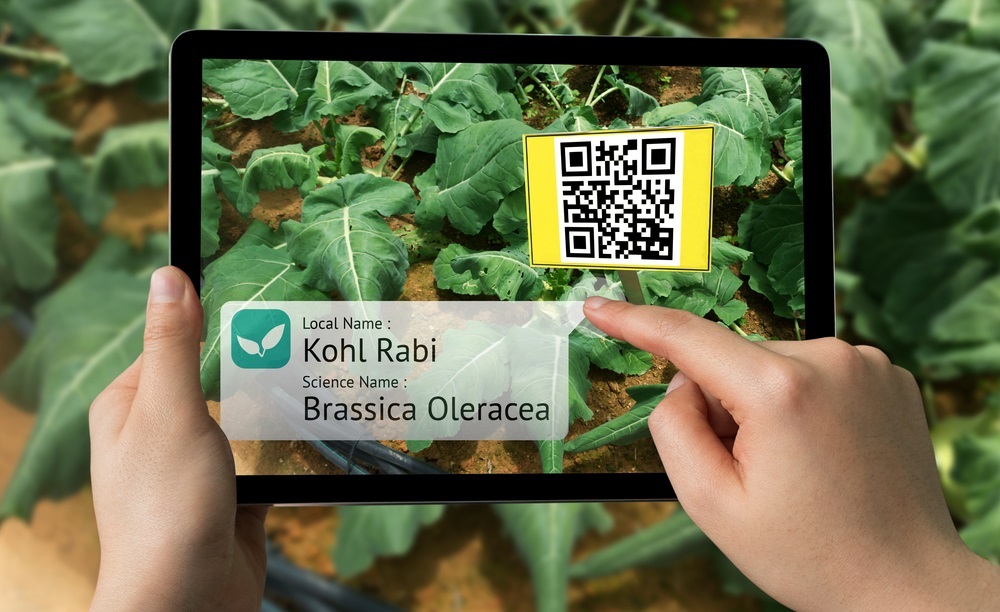 The codes can also be inserted into children's storybooks, bring their favorite characters to life, and help create meaningful connections between kids and books.
Related Post: Visual Interactive User Manuals for Consumer Products
2. Real estate
QR codes with AR markers can be sent via smartphones so prospective buyers can scan and see properties in 360 views without the need to travel.
AR VR in real estate can let potential buyers tour a property using smartphone augmented reality technology. It helps showcase the existing property to buyers.
3. Art studios and museums
Many items kept at art studios and museums are off-limits for close viewing and touching. Augmented Reality with QR codes can be kept beside artifacts which on scanning can allow the viewer to delve into an interactive AR experience giving many insights into the subject.
4. Tourism
AR in tourism helps travelers experience the places and provides opportunities for interaction.
Cities can have codes placed at cultural sites and bus and metro stops that allow visitors and residents to get information about the city and tourist spots on a 3D interactive platform, making the travel experience fun and informative.
5. Marketing campaigns
QR codes can enhance the user experience and allow brands to find innovative ways, like quizzes or treasure hunts, to engage with customers.
Customers connect and engage better with a brand based on the experience it offers, leading to higher loyalty.
Future of Augmented Reality QR Codes
AR QR codes are moving from experimental campaigns to everyday utilities. The near term will bring lighter WebAR runtimes, better compression for 3D assets, and faster scene initialization that cuts time to first interaction. Expect richer personalization as AI tailors content based on context such as location, time, or previous interactions. In retail, QR on packaging will unlock try-before-you-buy, guided setup, and on-shelf comparisons that reduce returns and support informed purchases.
On the enterprise side, AR QR codes will anchor just-in-time instructions to equipment, tie into digital twins, and connect to service histories for safer maintenance. Standards for privacy and analytics will mature, giving teams trustworthy engagement data without over-collecting. As spatial computing headsets and pass-through devices gain adoption, the same QR markers can serve both phones and head-worn displays, creating a single trigger for multi-device AR.
Wrapping Up
AR QR codes turn a simple scan into a hands-on experience that educates, convinces, and converts. They bridge printed assets, packaging, and real spaces with interactive content that people remember. If you want to test the impact quickly, start with one high-intent use case such as a product demo on packaging or an interactive how it works poster. Keep the scene lightweight, define one clear call to action, and measure dwell time along with conversions to learn what resonates.
We take pride in helping build brand experience and loyalty. We at KOMPANIONS work continuously to deploy our pioneering technology, innovative solutions, and unparalleled services in the most engaging ways.